
Espressif chipsets power IoT deployments in six high-growth verticals — each demanding unique wireless performance, security, and power profiles.
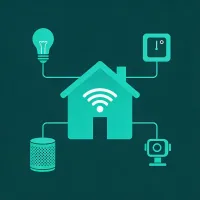
Wi-Fi + BLE combo modules powering smart speakers, lighting systems, security cameras, and appliance controllers with Matter protocol support.

Ruggedized modules with extended temperature range (-40 to +85 °C), Thread mesh networking, and deterministic latency for factory floor deployments.
Low-power wide-area connectivity for street lighting, environmental monitoring, waste management, and public safety systems.
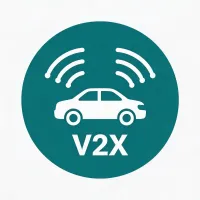
AEC-Q100 qualified chipsets for in-vehicle infotainment, telematics gateways, and EV charging station connectivity.

Dual-core SoCs with integrated neural network accelerators enabling on-device inference for keyword spotting, image classification, and predictive maintenance.

Ultra-low-power BLE modules with deep-sleep currents under 10 µA, enabling multi-year battery life in wearable health monitors and fitness trackers.
| Requirement | Smart Home | Industrial IoT | Smart City | Automotive | Edge AI |
|---|---|---|---|---|---|
| Primary Protocol | Wi-Fi + BLE | Thread / Zigbee | LoRa / NB-IoT | Wi-Fi + BLE | Wi-Fi 6 |
| Power Budget | Mains / Battery | Battery 5+ yr | Solar / Battery | Vehicle Power | PoE / Mains |
| Temp Range | 0 to 50 °C | -40 to +85 °C | -30 to +70 °C | -40 to +105 °C | 0 to 60 °C |
| Security | Secure Boot + OTA | Hardware Root of Trust | End-to-End Encryption | AEC-Q100 + Secure Element | Secure Enclave |
| Certification | FCC, CE, Matter | IEC 62443 | Regional RF | AEC-Q100, E-Mark | FCC, CE |
Each industry vertical introduces specific constraints that influence chipset selection and system architecture.
AEC-Q100 qualification adds 16-24 weeks to the product development cycle compared to consumer-grade modules. Design freezes must account for automotive-specific reliability testing (temperature cycling, HTOL, ESD) that cannot be accelerated without compromising compliance.
Factory environments often require coexistence of Wi-Fi, Thread, Zigbee, and legacy proprietary protocols on the same floor. Our multi-protocol SoCs address radio coexistence, but application-layer integration with existing SCADA/MES systems requires custom middleware development — typically 4-8 weeks of professional services engagement.
Our application engineers can help match the optimal chipset, module, and protocol stack to your specific vertical requirements.
Talk to an Application Engineer